Blog Archives
Pagan Blog Project: B is for Belief
What I believe
Since this blog is entirely about my own personal path and how it has been developing I think its about time I actually discussed what some of my beliefs are. One thing about my beliefs is that while I do have core beliefs how I understand that has been known to change and evolve. This is a good thing. When my understanding of my beliefs change or how I apply my beliefs changes it means I have grown and developed quite a bit spiritually.
The whole idea with spirituality for me is to develop my sense of connection to the universe and to my Gods. As my experiences change in the world around me and as I learn new things I may change my beliefs. I don’t believe in having solid and steady unchanging beliefs. For me to have an unchanging or to be unwilling to change beliefs and practices when given different experiences means that I am not willing to grow as a person. In nature that which does not grow or change dies. The same thing can happen to a persons spirituality. If they are not open to new experiences and developments they will not grow spiritually and their spirituality and personal spirit can die.
Now that I have explained some of that background information I can actually start to tell you a bit about my personal beliefs. As it has been mentioned before this blog serves mostly as a place for me to sort out information and concepts for my personal path and practices. This blog also serves as a way for me to try and form a cohesive path pieced together out of many different fragments and forms to be one united path.
So where should I start? I guess I will start with my belief in the divine. This is actually one of the simplest and most basic beliefs that I have. It has evolved out of study and reading of multiple sacred texts and mythologies. This belief has also developed out of my personal study of folklore and fairy tales as well as personal experiences in the spirit worlds and in worship with many different Gods,
I personally would call myself an omnitheist. I will get into that in a different post later as omnitheism is one of the core tenants in this path I am developing. Omnitheism is essentially the belief in all deities. I do not need to know about or experience and have personal relationships with all deities to believe in them. In holding this belief I can respect every path on the planet equally as all of the Gods worshiped are equally valid in my view. I have had personal experiences with to many different God personalities to say that some Gods exist and others don’t. So I believe that they are all real.
I think the next thing I will touch on is cosmology. My cosmology is complex and simple. I believe in many other worlds. I believe that because of all the Gods all the different heavens exist as do all the different underworlds. I believe that they are all separate realms within a basic three realm paradigm. All the realms of the Gods are in the upper worlds and heavens. All of the underworlds or lands of the dead are in one location with this reality or earth in the middle.
That is the basics. This is where it gets a little more complicated. I also believe in realms for individual spirit types. I believe there is a realm for all fire spirits and all water spirits you get the idea. I also believe in realms of the elements. I also believe in a realm where all form of Dragons live and exist. I believe in a realm and world of the elves as well as the dwarves and other spirits. I believe that these worlds exist here along side this world in ways that we can’t really see and experience.
I also hold the nine worlds in Germanic mythology as part of my paradigm. So it holds that else where in the cosmos the realms and the worlds of the other spiritual paths and Gods would be there as well. I have not experienced all of them but I can see them all being there. They are all tied together through the web of human experience which will bring me to my next belief and concept.
I believe in Fate. Fate is the web of reality. Fate is the universe. Fate is all of us interacting together in a way we can not all understand. Fate is the way that we are all interconnected and related on a spiritual and universal level. Fate is everything around us, all that we see hear and experience and all that exists on the other side of the world at the same time unseen and essentially unknown to us.
Fate is that which must happen based on that which has gone before. Fate is a combination of events that work together to create what which we know and see as the world we live in. Fate is also how the unseen worlds and the unseen forces in the universe work for us and against us. Fate is cause and effect. Fate is basically all options at any time but only that which fits according to the patterns woven in our lives will come out to pass.
I will say more on fate at a later date. For now we are a part of fate and fate is reality. This forms a large part of my world view and the view of reality around me. It also plays a little into my belief and understanding on what magic is. Though part of my belief in fate and my belief in the many underworlds and afterlife is a belief in the soul.
I believe in a soul. I also believe in an afterlife. My belief in the soul plays a role in my belief in the afterlife and in the other worlds. My belief in the soul is one of the core beliefs I am setting for this tradition. I believe that the soul is actually not just one thing but a combination of five different spiritual forces that work together to form an individual life. I believe that in essence the soul is eternal but it also changes forms and has different parts. Each part has a different role. Because the belief in the soul is complex I am going to leave it at this: I believe in a soul that is the force of life that allows us to live and have experiences. It is what makes a person or being alive.
I believe in spiritual realms for different spirits. So I believe in many different spirits. I believe that all animals have a spirit inside of them or an individual soul. I also believe that there is a spirit ruling over all domestic dogs for example and the like. I also believe that each individual species of plants have their guardian spirit of that plant species as well as individual souls. I even believe that stones and crystals also have a ruling spirit and an individual spirit.
I also believe in Genis Loci or the spirits of places. I believe that mountains have their own spirits. I believe that ponds have their own spirits. I even believe that small ponds can also have many spirits in the area like mountain spirits, broke spirits, as well as the spirits of all the plants and animals in the area. I believe homes posses individual spirits. I also believe that the land our homes our build on also have individual spirit forces.
I believe in magic. Magic I believe is a practice, a force, a skill, and a craft. I believe that magic is the energy we use to cause changes in this world. I also believe that magic is the force that causes change in this universe. I believe magic is the force of change and creation. Its a force for creation and destruction. Magic is a force for life and for spiritual gain as well as daily gain. Magic is also a mystery and a tool by which we can access the mysteries of the universe.
I also believe in psychic abilities. I believe that we can sense and see spirits. I believe that people can sense and see spiritual energy and personal energetic fields known as auras. I also believe that we can contact guardian spirits and receive information from them. I believe that we can also tap into some higher selves and spirit forms and use tools like tarot cards, runes, shells, bones, and other objects to tell or gain insight into the future.
I believe that we all have these psychic abilities. I do believe that we need to learn how to train them and work with them though. I believe that psychic abilities like these provide us all with excellent ways to understand the world around us. It is also through our psychic abilities and practices that we can experience spirits, Gods, and travel to the other worlds. So I believe that learning what our specific psychic senses are strongest and working with them to be developed is essential to spiritual development.
I believe in spirit world travels. I believe that we can travel in spirit to the other worlds. I believe that these travels help us understand and experience the mysteries of the universe. These travels give me insight into the different types of spirits out there and how they may work. Its how I meet spirit guides and how I have experienced some Gods and the spirit realms. Astral travel and shamanic journeys are central tools to this practice.
So there you have it. You have some of the basic beliefs that I hold. As I said some of the beliefs I hold are very complex and could use more attention than warranted in this one post about the basic beliefs I have. Those beliefs like the ones on the cosmology, fate, and the soul are going to be written about in more length as time continues. For now you at least know where my basic beliefs are.
As always if you have any questions for me about my beliefs or anything I post or say here please let me know. I will answer them to the best of my ability.
Pagan Blog Project: F is for Freedom
One of the good things that happens when a person chooses to go off on their own spiritual path they realize that they have a lot of personal freedom and power. For many people this is a good thing are they felt that they had no power or freedom to really experience the Gods or spirits in the religion they original came from.
When a person start their new path the sky is the limit for them They are not limited by anything said by anyone else. The only thing that they are limited by is their own thoughts deed and actions. They are free to experience spirituality and the Gods however they choose.
This new found freedom can also be scary. Here you have to make all the choices. No one is telling you how to worship your Gods and how to practice. This is something that will take time to get used to. A lot of time the Gods and the spirits are the ones that will teach you and direct you on your new paths.

By trusting your intuition and your spirit guides you will find your path. You may be given advice like this:

This path is yours. Walk it freely, and walk it proudly. Only you know yourself, your path, your craft, and your Gods. Use that knowledge to freely develop your path.
Pagan Blog Project: A is for Angels
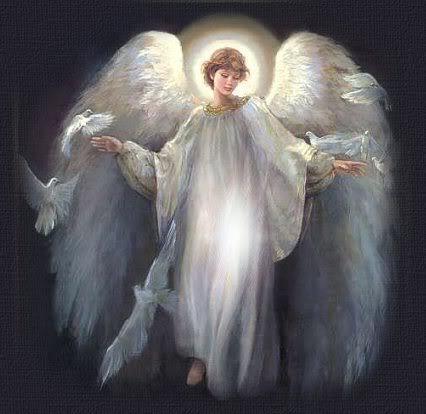
What are angels? This is a question I have found myself asking myself recently. I once believed that I knew exactly what angels where. Then I heard conflicting stories of them being servants of only one specific God, the God of Christianity, Islam, and Judaism and there for bound to only help and work with those who follow Yaweh/Allah/Jehova. Other people claim that they are simply servants of divine forces and are not limited to a specific set of religions or religious beliefs.
I personally believe angels to be servants of the God Jehova/Allah/Yaweh. Other Gods do have servants or minor Gods that work as messengers and intermediaries between them and humans but I don’t necessarily believe they are angels. That being said I believe that so long as there is a connection in your life to those three religions (Christianity, Islam, and Judaism) they will help and work with you. This connection could be continuing family celebrations, a belief in them, and or a belief in Jesus or that God as a God just not the only God.
I have always held a belief in angels. Though I have not worked with them since the early years on my path as a witch. I knew others still worked with them magically through enochian magic, ceremonial magic, and at times Hoodoo. These three magical traditions are associated with Christianity and angelic magic and angelic work for spiritual practices as well as magical practices. Now I have started to work with angelic forces again.
If you want to work with angelic forces and angelic spirits you simply need to be open to their force. The force that angelic spirits are made up is pure unconditional divine love. If you have any sort of connection in your life to the three paths of Abraham you can work with these spirits. You just need to open yourself up to working with them. They will make themselves known to you.
Pagan Blog Project: A-Altar management
One of the things that I have been lacking in my practice is proper altar maintenance and management. Now what is altar maintenance? Not to mention what is altar management? Well that depends. There are many things that it can mean. It can be as simple as remembering to pray there regularly to build up power. It can be washing the items on the altar regularly so that dirt or dust don’t accumulate. It can be many different things. Proper altar maintenance is part of establishing a healthy spiritual practice with regular applications in daily life.
For myself altar maintenance actually means all of those things I mentioned and more. For a long time I have had my altars set up as a part of my house decoration. I would nod at them in the morning occasionally as a reminder that each day is a gift from the Gods but aside from that they weren’t used often. Seeing the altars set up did make me feel connected to my spirituality so it did serve a purpose but I wasn’t letting it serve its main purpose which is to serve as a focal point for workings with the various spirits that I work with.
I have lacked altar maintenance. Altar maintenance would be cleaning the dust off the altar. Making sure that there is fresh water daily for the spirits, cleaning the altar cloths on a regular basis, bathing the statues ritually, cleansing and consecrating the place on a regular basis. These are all little ritual items that I could have done and should have done on a regular basis that not only would build my connection to my spirit allies but would also keep my spirit soaring.
Altar management for me is a bit more complicated than that. Altar management is the actual use and working of an altar. Here we have decorating for rituals and sabbats, we have performing offerings, prayers, and magical workings. All of these things are part of altar management.
This is yet again and area that I have lacked in my spiritual progress and development. I rarely decorate the altars for the sabbat or esbat at hand when I do work those rituals. I haven’t been good about praying at my altars as a regular communication practice and as a way to build a relationship with them. Nor have I been particularly good about giving them offerings either.
Altar management is also for me changing the altars around periodically. For me it is about really letting the Gods and spirits know what sort of items they want on their altars. Each spirit and altar is going to be different so its important to make them all unique. So if the Gods and the elements tell you to use one tool over another in ritual and on the altar that is altar management.
Most of my magical workings are not done on my altars but on any space I can find. The only times they are is when I am typically doing a healing work of some sort and need the assistance of my guides and allies. Then I work at my altar and pray. The rest of the time its not done at my altar. Though I may occasionally burn the incenses I have made on them. Working magic on the altars would also be a way of deepening spirit contact and relationships.
These two things that seem simple are things that I have been lacking in my life. These are also things that I have been working on correcting in my life. For me right now I have a goal of working on developing a more consistent daily practice of my path. I am really working to integrate my beliefs and my studies into everything I do part of every day. Its a challenge but its been worth it.
The first real thing for me has been developing my new ritual room and ritual space. There is still some more work I would like to do and things I need to get. For now though it really looks like a sacred space or at least a place for performing and working various rituals. Part of getting this room set up was finally getting the altars to where I like them and what I want to do with them.
In setting up my ritual room I now have a place to perform daily rites and workings with spirits. So now I can really work on digging into my spirituality and developing those relationships. The first thing I am working on is altar maintenance and altar management. These two things can be worked on together by creating daily prayer and offering routines.
The first part of the maintenance though was in the creation of some new altars and some new sacred space for those prayer workings and ritual workings. Here now are the new altars and shrines I have created for my new ritual area.
The first altar I am going to discuss is my main working altar:

This altar is where all my actual worship of Gods and Goddesses occurs. On the wall there is a Pentacle with a Stags head for the God and a clay plate impression of a Goddess who is mother earth. These are on the wall to show the places of the God and Goddess as well as to form a background. In the center of the altar there is a birch wood circle which I use to hold the candle lit for prayers and devotions. In the back you can see my wand. My stang and my broom are on either side of the altar. This is set up and basically ready to go for any ritual at any time.
The next altar is my Dragon altar:

Here I am actually performing altar maintenance and management by burning incense for them and lighting a candle. You can also see how that altar is clearly focused on being there for the dragons. The incense that was offered was Dragons Blood. Dragons Blood is a favorite incense of many dragon spirits and they feed off its scent and love. I’ll get into working with dragons another time. For now I performed maintenance then by giving them an offering.
This is my ancestral altar:

Every item on my ancestral altar has importance to me. This altar is actually a new design. My original ancestral altar was much smaller and less formally organized. This altar on one side you see several different pictures. Those are the photos of my deceased loved ones. There is also a photo on there of my biological mother and her father. I don’t know if either one of them are still alive. The photo is there is symbolic of my ties to my blood ancestors so that they know they are not forgotten. The large goblet there is the chalice for them. It contains water I give them as an offering or any other liquid. The candle next to them is light and fire giving my prayers a vessel. The skull actually serves as a place for them to manifest during working rituals. The bottle of GlenLivet on there is a connection to my fiance’s grandfather. Finally the red tie across the altar comes from my grandmother’s robe. I use the red color to be symbolic of blood but also of spirit and all the ties and bonds that we share together.
The next two altars are works in progress. They will grow as my relationships with these spirits grow. I am also going to see about getting more storage containers like the one my Dragon altar is on so I can set up a few more altars and shrines. I feel I should set up one for my Norse God practices. I also sort of feel like there are other spirits wanting to work with me and have altars built for them.
This is my altar to the arch angel Micheal:

Micheal is the protector. He is also called the prince of heaven and is the leader of heaven’s army. This is why there is a sword on the altar. The candle is lit for is prayers. The candle also symbolises the element he is most often associated with which is fire. The water is there to offer him a drink. The plate is there for offerings.
This is my shrine for Moses:

The large staff there is going to be a conjure/hoodoo tool that I am making with the power of Moses. This staff will be used to call on his name and power in basically any rite that I would associate with him. The candles again serve as a place to show the prayers the water is his drink and the plate holds offerings of various forms.
You have now seen my altars. Part of my altar management now and altar maintenance now will be regular saying prayers at these altars. I will be offering fresh and clean water every day. I will wash the altars physically and make sure that they stay clean and fresh. I will in some way work at my altar each day building a relationship with the spirits therein.
Altar maintenance and management now to me is the simplest way I can work on making my religious and spiritual practices an active part of my day to day life. All in all it doesn’t take a lot of time. Its maintaining the practice, the sense of the sacred, and giving the time that becomes the issue in our lives. By writing this essay I have given myself some tangible tasks to do each day to work on my altars and with the spirits there in the altars.
Hoodoo Reflection-Theory and lore
After writing my blog post for last weeks entry in the Pagan Blog project I have spent some time going over the first instructional Hoodoo book I read. I actually wrote a review of the book and posted it several places online. I’m realizing now just how much correspondence information was in this book to start with. Now I am adding the information to a notebook. I’m writing down the recipes and the associations.
What I have just finished reading was a section on candle lore. There is still more to this section for me to learn and write down. I have candle colors and candle movements written down from this book. The next section I’m taking notes on is interpreting candle wax. It’s going to be a busy evening of writing down associations, recipes, and notes. However writing it in the notebook, then in my records and in an online types form will help me process the information better than I do anything else.
I’ve found the behavior of candle flames section of the lore and practice to be rather interesting. Its not something I had ever considered before in my workings with various types of fire. I may just start to be more mindful when I do more candle work. This section of the book has also made me realize that I definitely need to increase my stock of candles. I don’t have nearly as many non scented small working candles as I would like.
Well that basically consists of what I have done today for an exercise. I am going to do a bit more later on. There is still time in the day. It may be 5 in the evening but that still gives me plenty of time to do more studying, do a ritual or a working. It even gives me time to do other things as well.
As I work through the chapter in the Hoodoo book on elemental magic I realize I have a lot of new ideas to work with in connection to my work with elemental forces and magic. I have always loves working with elemental magic. All of the spells I write are typically based on working magic based on a single element or maybe more based on the context. Now I have several new ideas to consider when working elemental magic.
I know that the incense list, the water list, and even some of the color symbol lists in this book is not complete. I also know that it does not represent all of Hoodoo. I do know that these specific items I have found have given me many different concepts and ideas to work with. I for example never considered looking at the behavior of candles when I work magic with them as a part of understanding if the spell is going to work or not. I also have never really considered the practice of working with dirt or earth from various locations until now.
I am grateful that I have all of these opportunities to develop my own magical theories and practices through the exploration of several different systems. I had been using some concepts found in Cunningham’s two elemental magic books for my spell work as well as the idea of ribbons and tying knots for magic. Now I am exploring other traditions and styles of working magic.
I know with Hoodoo that I have a lot to learn. I also know I should look at my own motives for wanting to learn and practice this style of magic. I have some ideas for why I might be interested but I am not sure if they are enough at times to be honest. I’m also not sure entirely if I as a white female have a right to practice an African American folk magic tradition that was developed because of slavery. There are some ethical considerations here that I am working through.
I need to in the next few days also submit my application for training in different traditions and styles of witchcraft. I am going to do my best to establish daily exercises and training practices for psychic development skills as well as magical skills in the mean time till the training starts. I know for myself that having a structure to my training imposed by a teacher has in the past always helped me maintain focus and be able to establish a daily spiritual practice.
So there is a lot brewing for me spiritually and magically right now. This is a dramatic change from a few weeks ago when I wanted to reconnect spiritually but had no motivation to do so. Now I have a lot of options and opportunities for me to study and grow. I’m trying to make decisions on where to go and what to do. Oddly enough that was my blog post today for the pagan blog project.
I do pray daily. I am currently consecrating and building power at my ancestral altar. I do need to do something about the candle I have there for them. The wick is basically unexposed and the wax walls are too high where even if it does burn the liquid wax will extinguish it instantly. I think I am going to try and soften the wax and melt is down on one side of the candle so that new wax will have a place to drip and fall while the wick can still be exposed and be lit for veneration purposes. Until I work with that I do offer them water daily and pray in the morning and at night a prayer I wrote. I also pray a slightly modified version of a prayer written by a Hoodoo author. That prayer resonated with me which is why I used it.
Right now the use of daily prayer has been the biggest way I have worked on developing a daily spiritual practice. Prayer I believe is a good first step. It offers communication and practice of talking to the spirits. It also offers time to connect mentally and spiritually with the sacred each day. So by doing so in the morning and in the evening I am effectively starting aspects of a daily practice where my spirituality and religion become part of my actual life.
The section of my book on Hoodoo I am working through taking notes and correspondences on is now focused on talismans and charms. This current section mentions several different animal parts that are traditionally used in Hoodoo work. Reading these ingredients and their uses as charms both intrigues me beyond belief and gives me the creeps at the same time. Some of the items I can sort of see getting easy of you for example raise chicken for meat or for eggs. You then would have access to chicken feet. Other things I’m not so sure about.
I do know that some of the items can also be bought frozen at regional specialty markets. I’ve gone through the local oriental markets and I have seen chicken feet in their frozen food section. So there are ways to get some of the animal part items listed with out having to kill them or physically obtain the items myself. Still its not always a comfortable thought for me. Its something that I actively struggle with in my Hoodoo studies.
This is one aspect of Hoodoo that I am still struggling with dealing with. The magical traditions and paradigms I have worked with up till now have all been very adamant about not using animal parts in their workings. When I started to look into traditional witchcraft though that aspect started to change. I started to become more aware of deeper traditions and the use of items like bones and blood of animals in rituals and spells to gain and consecrate their powers. Still because I had been raised against animal sacrifice and against the use of animal parts in spells and rituals for years the adjustment to this worldview change has been difficult.
I started to lift my ban on animal part works when I used snake skin successfully in several healing and rebirth spells. I realized then that if I was using snake skin what then would be so different about using a feather, or claws and whiskers of other animals that I could come across? Animals shed their fur. I know that house cats can and do on occasions shed their claws. If you come across these items in the wild and in nature while walking then they are gifts and I see no reason not to work with them.
To me that counts as finding the gift in nature or around you (road kill). Having your pet bring you the items also counts as finding them in nature. Here the idea is that the animal died natural causes, was killed by something else and you are taking advantage of it (like many animals and creatures in nature) or a combination of these. You didn’t kill it. You found it and used what you could for it. Bones are a good one to find and use this way.
I know some wolf refugee centers or rehab centers will gather the fur and package them for people to use in spells and rituals and other things. I have seen a few of these packaged. I may if I get a chance to visit the local wild animal shelter/rehab this spring/summer bring a bag with me specifically to look at the feathers of the birds in the area and see if I can get some to bring home.
In both of the above situations the items you find that belong to these animals are gifts from nature for you and you alone. They are to be respected and thanked. Like all gifts in nature something should be left as a token of your thanks as payment for the animals death (if they are dead) or for their shedding if they are alive. Though I dont know what I would give at the local rehab farm (set up to rehab the animals and also teach the children and adults in the state about the different wildlife we have and how to help them).
I could kill an animal to eat it. That i have no problem with. Its part of life. I personally believe in not killing an animal unless I intend to eat it. This is how I was raised. Even with eating it I would still try to find as many uses as I could for as much of the animal as possible. The skin would probably become leather for leather work.
I could also kill an animal if my survival depended on it (rabid animal attacking, bear/mountain lion attacks, etc). That though is self defense. Even if I killed an animal in self defense I would still eat it. They are meat after all. Why waste it? Though most of this sort of kill would probably get sacrificed to my Guides and Guardians that protect me in thanks for their protection.
So last night I finished the section in the book I am working through about using human parts in the spells and rituals. Once again like I felt with the animal parts I have some mixed feelings about this practice. Its something I have always had mixed feelings about. I’ve had major warnings early in my career and studies that witches don’t use those things and that doing so even with the best intentions can be incredibly dangerous.
There are somethings I have worked with already like hair and fingernails which I have no issue with. Hair is cut and can be kept and fingernails are trimmed regularly. I used hair in a mojo bag type of spell to personalize it and connect it to my fiance’. I have my own hair to be used in spells and rituals for the same reason. I don’t have any fingernail clippings but I may start keeping them.
I have thought about working with blood. Blood magic is something I have considered doing and I know that power that it would have. I just have not done it yet. Though there are a few spells and rituals I am working soon that I think a finger pricking for blood will be needed to boost the power and effectiveness of the spell. I also know that using your blood is a very traditional practice in many styles of magic. So it obviously has power and effectiveness otherwise it wouldn’t be found in so many different cultures.
Blood was mentioned in the Hoodoo book but it was not normal blood. The blood mentioned specifically in this book was menstrual blood. This is something that I have never been comfortable with. I have heard of many traditional styled female witches using their own menstrual blood in a spell and or a ritual. For them it is the ultimate power and ultimate essence of who they are. For me its just not something I would consider. Some of the traditions given even gave examples or ways that men could work magic using their mates menstrual blood. Most of it involved food of some sort. Sorry that just makes me sick to my stomach.
Semen was another item that was discussed being used in rootwork in a few different ways. I like some of the ideas and I can sort of see how one or two of them might work. Still for me its a discomforting issue. Its not something I like to think about or deal with. Now I again can see how for men or women it would be an effective and powerful way to work your will on them but still. I don’t think I could do it myself.
There were a few other items listed in the book but I’m not going to really go over all of them. They did make me think. Again I had heard of the use and working with those items but I had never considered it myself until now. One of the items mentioned I know is a major component in witches bottles for protection. That is a spell I actually considered doing in my new home and I may still make one in the spring. Its sort of hard to bury and hide the jar from site in the middle of the winter.
Its interesting how I feel I can accept certain practices and uses of body its yet others I am utterly disturbed at working with. I think part of it may also be a cultural thing. That I was taught certain things are not to be touched and thought of. They are to be done and lived with and basically ignored. I may be able to overcome some of the views and issues I have with working with human body parts or excretions but for now I think I will stick to hair, spit, and fingernails.
Its interesting just how different traditions and styles of Hoodoo can be like any other magical tradition. I have one book that is full of prayers and invocations to spirits and gods as part of their conjure practice. I loves seeing those prayers and petitions to the saints and the angels. That is what I associate with Hoodoo-prayers and petition to spirits along with magical acts.
The book I am currently working though says that its almost never used. That would be a contradiction to most people. I see it as different views. One view is much more animistic and believing in the inherent spirit of the items used in the work being the power behind the working while another works more strongly with angelic forces or other spirits for assistance. It all goes with just where in the cultural view of things you go.
I for one thing I am going to go back and forth between calling on spirits and between working with the spirit force in the herbs, stones, and other items used in the spells. I do like the idea of building working relationships with deities and with spirits through magic work and ritual work. I just don’t think that all the spells or rituals I do should revolve around that practice. Being able to work spells on my own with the nature spirits and my own spirit force is important to me.
Plus by working with the spirits of the plants or crystals or other nature based objects in the spell work I also gain even more spirit allies. So in some ways no matter how I perform my Hoodoo work I am going to be working with a spirit of some sort. This I guess just plays into one of the definitions I have come across for Hoodoo which is that is is a form of African American shamanism that survives today through folk magic.
I just finished a section on how to dispose of the tricks or working done in Rootwork best. This is the practice many people refer to as laying the tricks. I guess in some ways it could be considered how the spells are actually sent out into the world. The theories and practices in Hoodoo are definitely different from most of the European styles of magic I have studied and explored. This is actually a good thing as it expands my magical theories and philosophies.
It also gave some good reasons for why tricks would be placed where they should be. Now I knew the first time I read this book and when I wrote the review for it that there was a lot of lore in it. Now that I actually transcribe it I’m amazed at just how much lore and information there is out there for Rootwork. I haven’t even gotten to the spells section of the book. This is all a magical theory section of the book. I’m sure there is going to be even more when I actually look into some of the spells provided in this book.
I know one thing. I will have a whole lot of new correspondences to add to my BOS’s when I am finished transcribing theory notes, belief notes, and the like from my notebook to my actual BOS. I may even create a BOS just for my work and studies with Hoodoo as well as including it in my personal spell book/magical studies book and my philosophy/journey BOS book. For now I will continue to absorb as much of the information as I can through transcribing notes in my notebook.
The idea of disposing of magical supplies and spell tools after a spell has been cast is something that has always been bugging me at the back of my head. With my packet spells I have either burned them or tossed them into the trash. I know some people would shudder at the idea of simply tossing them in the trash but when you think about it the energy has been placed elsewhere. What else are you going to do with that paper? Still the idea of how to lay a trick or spell to get maximum effect as outlined in this section of theory did get me thinking.
Some of the ideas even made sense to me. The ideas between crossroads and running water seemed to fit along with other folklore beliefs I have heard about as well. In most of the religious and spiritual traditions I have studied the crossroad especially form powerful places for working magic and for spiritual practices. This is a power I have always wanted to explore.
There is a rite I read about in traditional witchcraft that seemed like it might be cool to do. Unfortunately it required a crossroads which was something I had but it wasn’t really “secluded” the roads were major roads. Here they aren’t really major roads though there are a lot of houses around the area. So I may have to be very creative as to when I find time to work the rite.
It says to do it at night when no one is around but I wonder if it could be as powerful done during the day. There is also the logistics of transporting and carrying my stang down stairs and outside without drawing the attention of or waking up my fiance’. In either case I still have to find a way to not draw attention to myself when performing the rite outside. Thankfully this is a pretty private area and a pretty quiet one. I’m sure if I were to be out with it I could make it look like a night time stroll or something.
Any way if I am meant to do that rite I will find something to make it work. Thats really how I look at it. I will know when it is right to perform that specific rite. Just like I knew it was time to start working the LBRP for myself again and that it was also time to start doing daily and nightly prayers again. I will feel a drive and a desire to perform the work so strongly that really nothing will stop me from doing that work.
For now my inspiration seems to come from mainly Hoodoo. Though I am also having an urge to go deeper into my herbal magic studies. Right now in regards to herbal magic I mostly work it in the form of incense or tinctures. I haven’t done much kitchen magic or herbal charm practices. I also haven’t done much work with herbs in potions either. I think part of the desire to learn more about herbal magic and herbal work is that I just got a long list of herbs used as charms in Hoodoo lore that makes me wonder a bit more about the lore of plants in European Folk Magic.
Hoodoo is a system of folk magic and folk wisdom that does rely heavily on herbal associations. I mean I believe that is in part where the name RootWoork for Hoodoo comes from as well. So it would make sense that as I learn about new herbs I haven’t heard of before I would also want to look at and explore the talisman or charm properties of some of the plants I have worked with before. There is some wisdom and lore out there concerning European Folk Magic and Folk Lore. I just need to find it.
I’m no longer fighting my desire to learn and practice what I read about in Hoodoo. While I am going to continue to read and research and develop my knowledge base in a text and note format I am also going to try and get some practical experience as well. I’ve found that in the past I let my fears of not doing something right or of not having enough information on a topic get the best of me and never really did the practical work. Now that needs to change. Now I just need to gather a few materials and start crafting one of my tools for Hoodoo.
Review: I am Healer, Story Teller, and Warrior Priest: Learning from Arianrhod

The book I am Healer, Story Teller, and Warrior Priest: Learning from Arianrhod is a short book. This book focuses on the lessons of one specific Goddess within the Celtic pantheons. This book covers many different lessons for personal and spiritual development. The overall concept and goal behind the entire book is to gain a better sense of Self and the relationship to the divine.
The author divided the book up into 4 different sections. Each section of the book had a specific set of lessons in them. The first section of the book is basically an introduction section. Here you are given a starting point for the journey of the book. This is the only section of the book that is made up of one chapter.
The second section of the book is about myths and legends. This section of the book provides two key mythological tales from Celtic lore. The section here then discusses and provides and overview of those two mythic tales and the various lessons in them. Here we learn about some important deities in Celtic spirituality but also learn quite a bit about the relationships between the different divine groups within the Celtic pantheons.
The third section of the book covers the topic of the Goddesses Arianrhod and Bloudeuwedd. Here we get information about their specific characters and their roles in the mythos. We also learn about the symbols of these Goddesses and how they can be worked with spiritually. Section three is also made up of one chapter.
The final section in the book is titled “Manifesting the divine”. This is the section that finally ties in the title of the book to the rest of the book. Here we finally see the roles of the warrior, the healers, the priests, and other ways of manifesting and working with the divine energy explored earlier in this book. Here we get into some practical work and can find spiritual development.
The first chapter in the book covers the concepts of what which has been lost and that which has been found. Here the author introduces the concept of the self as a relation to the divine and the divine energy of the universe. The author touches on Jungian psychology and philosophy. This chapter forms the basic concept of the book which is to gain connection to the divine and the Gods.
The second chapter begins the section on mythology. Here the author starts us off by introducing the first set of myths one should read in regards to Irish paganism. These are the invasion cycles covering the three groups that battled over time for control of Ireland.
The third chapter talks about one of the most famous groups mentioned in the myths of Celtic tribes. This is the group called the Tuatha De Dannan. These are the people known as the fae and fairies to the Christians, while to the Celts these people were there deities and are deities to those who practice modern Celtic spirituality.
Chapter four is called “The ‘Tyranny’ of Bres”. This chapter covers a series of battles and challenges faced by the Tuatha de Dannan as they were ruled by this king. Here we learn of many hardships the Tuatha De Dannan are forced to face and how their teachings are forbidden.
Chapter five gets into some of the symbols that come up in the myths regarding the Tuatha De Dannan. Here the author provides insight as to some deeper meanings and concepts in the myths just read.
In chapter six we are introduced to The Mabinogion. Here the author gives an account of the various books and tales within this collection of Welsh myths. The author while not providing the entire extensive texts provides you with enough understanding to be able to know what the story contains and who the characters are.
Chapter seven discusses the importance of the Mabinogion in today’s world. Here the author discusses the themes and concepts found within the Mabinogion. You are provided with heroes and gods and how their symbolism and their stories are still relevant in the world we live in today.
Chapter eight makes up the entirety of the third section. This chapter focuses on two goddesses from The Mabinogion and their symbolism. We are taught their sides of the story and the symbols in the myths. Here we even learn the meanings behind the use of the flowers that make up the Goddess Blodeuwedd and how that plays into her character.
Chapter nine is where we enter the final section of the book. here the author discusses and goes over the concept of the wounded healer. Here we learn what it means to heal from wounds and what it means to be a true healer. Here we learn that it is ok for us to show our scars from healing ourselves. This shows that we can go on and live with the pain.
Chapter ten starts a discussion on shamanism. Here we learn the authors concept of the shaman soul. We learn about the different aspects of ourselves and how to work them together.
Chapter eleven teaches us some magical and spiritual philosophies involved in manifesting the divine and creating a relationship with the divine. Here the author gets into a few of the concepts found in The Kyballion.
In chapter twelve the author gets into their views on the different bodies that a person has. The concepts here include the emotional body, the physical body, the spiritual body, and the mental body. The author also gets into their relationship to each other and how they work to make us a whole person.
Chapter thirteen teaches us about being a spiritual warrior. Here the author talks about the concepts of what it means to be a warrior and the traits of a warrior. Here the author gets into our responsibilities in the role of a warrior, self discipline, and being honest with oneself.
Chapter fourteen is a Mandala created by the author for Warriors. Its a way of mapping all of the selves. It is a way of showing consequences and actions. This is a “living” document according to the author as it changes and evolves as each individual grows and involves. Its a tool for showing and exploring spiritual and personal growth.
The fifteenth chapter of this book is all about the healer. Healers have always had an important role in religious and spiritual traditions. Here the author gives us a unique healing technique that they created. The author then goes into many other spiritual healing traditions including sweat lodges, Reiki, and affirmative prayer to name a few.
The sixteenth chapter in this book gets into the concept of the storyteller. Here the author explains why we need storytellers today and how they can fill a spiritual void. The author here gets into the spiritual roles as well as the practical roles of the storyteller.
The final and seventeenth chapter in this book covers the concept of the priesthood. The concept of priesthood in pagan and alternative spiritual paths is not always understood today. Here the author gets into the importance of the education that the members of the priesthood have to get in order to best serve their gods. The author talks about how the priesthood has a concept of service and how those who are of the priesthood must provide service of some sort to the community. The author also touches on how it is important to have recognition by others that you are of a service to the community.
The author ends the book by giving some advice on finding balance between all of these concepts. The author continues to explain and expand on the concept that it is up to you to do the work to make the connection and develop yourself spiritually.
Overall this author provides a lot of concepts to consider for developing your spiritual path. The author does well to tie in the concepts to Celtic spirituality specifically as that was the focus of the book yet leaves it open enough for you to find your own paths and relationships. The author does a good job of introducing some of the myths and the lore of Celtic paganism while giving the reader something to read and need to research on their own. This book provides an excellent starting point for Celtic spirituality while giving those on other spiritual paths many things to think about.
Why those who seek spiritual connections are always studying

The last few blog entries have been focusing on why pagans and witches are very individual people and why personal truth is so important. Today is a bit of a continuation on that theme. Today it’s about why witches and pagans are always seemingly reading a new book or looking for new materials to study,
There is always something new to explore or even something old to reexamine. With in the realms of spiritual practices and spiritual development there is always something new to learn about. There are so many different cultures out there that one can always look to new cultures for further inspiration as to where they would like to go or different types of practices.
I’m going to provide a few cultural examples that you can look at to see what I mean when it comes to looking for new things to study and explore to advance your spiritual practices and development. These are examples of things that I have looked at and thought about for my own personal studies. Though these will only serve as examples. From here I will go back and talk about what exactly this means for you as a seeker and a practitioner.
The first example I am going to cover is that of Germanic Paganism and witchcraft. These are two spiritual and religious paths that are a part of my personal practice that also inspire and help form the products that this business sells. This is also a popular culture to explore spiritually right now with more people having interest in Germanic mythology with new pop culture references.
In Germanic paganism there is a lot of lore that can be explored. Most people start off with the Eddas and Sagas. With in the Eddas and Sagas there are many tales of magical practices and spiritual works. This is where most of the concepts of Modern Germanic worship come from such as the Blot and the Sumbel. The Eddas and Sagas while having an extensive study in themselves, is not the only source of the lore out there.
Many people are familiar with the Grimm’s brothers fairy tales. These fairy tales actually come from the Germanic forests, These fairy tales provide another source of wealth for practicing Germanic Paganism and witchcraft. The tales describe many different spirits and even some of the traditional practices of the Dwarves, Witches, Elves, and other spirits found within Germanic cultures. These tales provide even further keys into the folk knowledge that create the base of witchcraft and other magical practices.
Aside from the fairytale and the Eddas there are other sources of practical information. The Rune poems give inspiration for the practice of rune magic which has been mentioned in the Eddas and the Sagas. By reading the Rune poems a Germanic Pagan begins to study another wealth of information regarding the spiritual practices of the ancient Germanic Pagans.
Even within the Umbrella of Germanic Paganism and practices one could go into even more specific studies. For example one could focus their attention on the continental practices in old Germany and Norway for example. Focusing even further on some of those specific tribes. One person could even focus on the Anglo-Saxon practices (England mostly here for those looking for a region). One could go so far as to say that even the Icelandic practices and tribal setting would have been different.
While each of these tribes had a base shared language and some base cultural similarities, the names for the Gods and even some of the specific practices were different. Though they were similar and related enough that the cultures and tribes were able to trade and intermarry and work successfully together in war and in peace.
Those are just a few examples from the Germanic cultures. There is so much to explore and study within one area of the vast umbrella of Paganism and Pagan spirituality that one will always find something new to learn and study. Even if a person decides to stick to a specific set of cultural practices and identities ( Germanic paths for example) there will always be something to learn.
Here is a set of examples from a different Pagan culture completely. Hellenic Paganism or Greek style Paganism has many different facets. This cultural style of study and practice can be even more difficult and extensive as it is so diverse. You have on one hand the cults for each city state as well as cults of areas.
Greece because of the way it was organized for many years did not have really a cohesive religion for the culture. They had in general a pantheon that they all shared with some common festivals, but each area was highly specific. There were areas where people focused their entire worship on One of the Gods and you had those whose temples were only really visited once a year (The Elysian mysteries for example).
Hellenic pagans from what I have found typically follow one or two specific Gods that are their Patron Gods. While extensive research into the practices of worship in the culture is important in order to form bonds closer to their chosen deities they will most likely focus their attention on studying the cult centers and cult worship of those Gods.
The above examples were specific to Paganism in general as a study. Now I am going to try and give some examples of magical practices from the view of a witch who is always studying and learning. This blog does focus on all of these topics so covering both of these topics in this entry is reasonable.
Within magic and witchcraft there are many different ways to practice and types of practices that one can study. To be honest there are so many options that a newbie often seeking to start practicing witchcraft can feel overwhelmed. Which is why many find that mastering spellcraft can be near impossible and they wonder if they are doing it right.
In magic you have herbalism, crystal and gem magic, Galdar, Seidr, Trance work, summoning, healing work, poppet magic, astral projection, weather work, ect. Often times a person may have so many interests that they can’t figure out where to start and will find that practices can overlap.
I’ll take Herbalism for example. In Herbalism a witch and magician studies the herbs that they work with. They can use them in powders and in potions as well as in oils, lotions, tinctures, soaps, and other types of charms. There is also the healing work with herbalism. Though while one studies making an oil for example they may learn or hear about spell oils from Hoodoo and then start to explore that for further herbal use and practices.
The examples above are one cultures examples of how deep and diverse the study of a cultures religious heritage can be. The above examples also illustrate just one example of why it is impossible to master the spiritual crafts. There will always be something new to learn and explore.
This is also why some witches, Pagans, and spiritual people tend to have rather extensive libraries. Books are used as references in work and in studies and are often to valuable to just borrow from a library when it is needed.
Know your craft

It is important to know your craft as a witch, pagan, or spiritual practitioner. One does not simply know their craft through books and study. One must practice and explore their craft in order to really know their craft.
It is often said that Witches dont believe. That they know. This is because they have experienced magic and spells. They have done the rituals and done the book study. Putting them together one gains knowledge and wisdom.
So how does one get to know their craft and path? One must gain experiences. By trying new techniques that are read about in books one gains new experiences. By performing exercises over and over one can gain deeper understanding of the topics they are exploring. This gains knowledge.
There is an academic study involved in the development of knowledge. This involves history and cultural studies. It involved studying mythology and folklore. It then involves studying practical modern books as well. From here we gain exercises and techniques to try.
The important thing is that one must actively practice their craft in order to really know the craft they practice. The practices give us experiences. These experiences are what give us the potential to access and experience the various types of mysteries mentioned in a earlier post.
Witches experience their craft. Pagans experience their deities in ritual and in trance. Shamans experience the spirits that they work with and fight. Magicians know the magical forces they work with. Here you could say that experience turns belief into knowledge and inner truths. In the end this is what it means to really know the truth and the crafts that we practice.
Some witches will choose to practice certain crafts more than others. Every witch must find their own practice and style of working their craft. There are never two witches who will practice the same thing. We must develop our own practices based on our own experiences and tastes.
Knowing our craft comes through study, exploration, testing, failures, and much more. This takes time and effort but it is worth it. Find what areas and styles of witchcraft really catch your fancy and drive you “wild”. Ignite your passions and find your craft. Create it and craft it. Learn it and study it make it yours and claim the knowledge for yourself.
~Loona Wynd~)0(
Forging Pentalism
So what gives about the blogs name? Forging the Pentacle?
The explanation is simple. The path I have started to develop is called Pentalism. There are five aspects to almost all parts of the practice. There are five primary influences, five Gods, Five goddesses, five parts of the soul, and more. The pentacle for me shows how while there can be five individual points, in the end they can all be connected and are always interwoven in peace. The Pentacle is an extremely sacred symbol for this path due to the importance of five. Pentalism is meant to be experienced in a group setting. However I have not really developed each of the degrees and practices (related to each of the foundational traditions of types of craft) I can’t really teach and initiate people until the first degree has been formed (I’ll develop the second degree material in my personal practice as I teach the first degree and so forth).
Ok, so that explains the name, what about content?
I already mentioned some of the content you will be seeing. There will be information on ritual content as well as some basic sabbat or holiday information. There will be some basic information about the deities involved (this is going to be an initiatory oath bound tradition). There will also be posts about failures and successes and everything in between. When I fail I want to have people laugh at it and also help me find out where I went wrong.
By writing this blog I am sharing the basic outline of what will become my tradition. I process information best when I write out my thoughts and my experiences. By putting the information and the process on a blog I hope to get input from other people in the Pagan community . I want that input to challenge me. I want people to point out mistakes in my research and logic. I also want people to tell me why they like something or find something useful. That way I can become a better writer and explore the things I write about in a different light.
This blog will also be participating in the Pagan Blog project. However all of the entries on this blog will reflect this path specifically and only this path. My other blog (Seeker sight) is more about my search for knowledge and wisdom which I can find any where. There will be some cross over as they both will cover some of the same beliefs and practices. That said both blogs should be treated as unique and individual blogs.
You said the title is “Forging the Pentacle” right? So what are your tools and what are the foundations and origins of Pentalism?
There are five primary spiritual and religious practices which form the basis of Pentalism. All of them are different forms of witchcraft as a spiritual practice. Each of them has provided me with many different ways of working my craft and my religion. They have all had an effect on how I have experienced the Gods and Goddesses of Pentalism. I don’t belong to any one of these practices, but have combined them all. Which is why I am and Pentalism will always remain an eclectic religious witchcraft tradition.
The first witchcraft path I must discuss is Wicca. When I say Wicca I don’t mean the works of Silver Raven Wolf, Edain Mc Coy, D.J. Conway, Raymond Buckland, or even Scott Cunningham to name a few. I am refering to the books by Janet and Stewart Farrar (What Witches Do, 8 Sabbats for Witches, Way of the Witches, The Witches God, The Witches Goddess), Gerald Gardner (Witchcraft Today and The meaning of Witchcraft), and some of Doreen Valientines work as well as the writings of Alex and Maxine Sanders. Those are actual Wiccan initiates who have lineage via initiation which is cross gender and that can be traces back through Gerald Gardner to the New Forest coven of witchcraft.
A brief explanation of how I define Wicca is required here. I define Wicca as an Oathbound, Mystery, Cross Gender initiatory, Orthapraxic Witchcult where every initiate is a member of the clergy That is a lot to swollow. So I am going to break it down into little bits. I’ll cover each section in it’s own paragraph. Once you’ read each paragraph you’ll see why that simple definition required extra explanation. You’ll also see why I have such a strict view on Wicca and why I am only Wiccan influenced and Inspiried.
Let’s start with the term “oath bound”. By oath bound I mean that the rites and rituals, mysteries, names of deities, and practices are known and only taught to initiates after initiation. Prior to initiation the rites and rituals a seeker and pre-initiate experience are Wiccan flavored and Inspired, but Not Wiccan. There are many religions whose practices are oath bound. In history the Eluisian mysteries come to mind as only the members of that cult ever experienced those rituals and knew what those rituals entailed. There you go. A historical reference to a religious practice and set of mysteries that are oath bound.
The next term in my definition is mystery oriented or based. So what does this mean? By Mystery I mean that there are some aspects of the religion that are based on expereince in ritual which are deeply intimate and can not truly be expressed by words. All witchcraft traditions have mysteries.
The Cross Gender initiation is self explanatory. Only men can initiate women and women can only initiate men. This goes into the power myth described in the decent of the Goddess. There is also an issue of polarity. I’m sure all the reasons for this practice are explained after initiation. It’s something I have experienced. The “public” rite I went to basically said that in their circles it’s male-female-male-female as much as possible (based on the ration of men to women). I actually think it’s a great way to raise energy.
The orthapraxic aspect of Wicca is something that many people can’t grasp coming from orthodox religions such as Christianity where having specific beliefs was the important part of the religion. In Wicca it is not the belief that is important rather it is the proper practice and performance of Wiccan rites and rituals (which can only be performed in a coven setting) that is important. It is the proper performance of these rites and rituals that allow the clergy
The witchcult aspect is important to note as well. Upon the seeker or dedicant’s initiation into Wicca they are made a witch. This is especially important if that person never identified or used that term before. All wiccans are witches, but not all witches are Wiccan. In fact most witches are not Wiccan. Wiccans are witches because they use witchcraft in both practical day to day life and in their worship of their deities. That is what makes them witches.
The final aspect of my definition of Wicca is that they are all members of the clergy. That is right. Once you have been initiated into Wicca you have become a priest or priestess of the Lord and Lady. For this reason every one is a part of the clergy. If you are not called to serve the Lord and Lady of the Isles (the two specific deities in Wicca) then you are not a proper person for Wicca.
Ok. So you explained what Wicca is. You didn’t explain why you say you are inspired by Wicca. Can we get an explanation for that please? Afterall you even said that you aren’t an initiate. There for you don’t actually know the rites and rituals of Wicca. So how are you influenced and inspired by Wicca?
There are a few reasons why I say that. The first thing is that I cleanse ad consecrate my holy water in the same fashion, often times using the same words outlined in 8 sabbats for witches. The second thing is that part of my understanding of the deities I work with (with in Pentalism) was influenced by the Oak and Holy King battles (also described in 8 sabbats for witches). Finally there is the full ceremonial outline. When a full complex ritual is performed it often includes all the elements described within Wicca. These form the first foundation of Pentalism.
The largest element found within my path is the central fact that this path is eclectic. Generic eclectic-neo pagan witchcraft can be found in many different books. My favorites include Christopher Penczak, Laurie Cabot, Ellen Dugan, and Doreen Valientine. I have however also been influenced by Starhawk, Silver Ravenwolf, Edain McCoy, D.J. Conway, Raymond Buckland, and Scott Cunningham (you see there was a reason I mentioned them before). All of these author claim to teach eclectic Wicca. There is no such thing (as shown above). There is however essentially a core tradition of eclectic neo-pagan witchcraft loosely based on Wicca and ceremonial magic as outlined by Cunningham in his book “Solitary Wicca” and “Living Wicca”. At the end of his life he did drop the association with Wicca and simply called it a witchcraft tradition, but the publisher kept the title as is.
The books by these authors all have different views of the God and Goddess and the wheel of the year. However there are some key and central similarities in the practices that lead me to believe they are essentially practicing the same religion, but not always the same way. It is a witchcraft tradition or set of traditions and way of thinking/practicing that has it’s own mysteries and basically a freelance style of ritual. Every eclectic is different, but they are all the same at the same time. We embrace the similarities and celebrate the differences. That is what being a true eclectic is all about.
The MMC concept here is one of the reasons I came to the 5 god and goddess concept for this tradition. It seemed with in the various discussions about the forms of the Goddess with in the wheel of the year there were some things described which never seemed to fit to the MMC concept. I started to see five different Gods and Goddesses described with in the lore and the rituals. That, along with the outline in Wicca lead me to the format that became the Gods and Goddesses of Pentalism.
The ideas about experimentation and the different types of ritual and altar set ups encountered through these books gave me the foundation of how to explore and experiment. That is what has lead me to know what does and doesn’t work for me in my religion and spirituality. That is how I have been able to begin to piece together this tradition. I am very thankful to be an eclectic and to have started to form a cohesive eclectic tradition that I am going to be proud to pass on to others.
Hedge witchcraft is a practice of witchcraft that not many people are aware of. While there are more books available on the subject these days, originally there were only a few websites out there that had any information out there. I am not entirely a hedge witch, but I do embrace and participate in the practices. I say I am not a hedge witch because it is not the only practice I engage in for my craft. While it has played a central role in my access to mysteries, it is not the only or the central aspect of my practice.
So what is hedge witchcraft? Hedge witchcraft is based on the concept of the hedge representing the border between the civilized world (towns, farms, and cities) from the wild (forests, open fields and stretches of road where no one is in sight) and the practitioner being able to be in both this world (civilized) and the other worlds (wilderness and forests). This is the European native form of shamanism.
One thing about hedge witches and hedge witchcraft it is essentially a solitary practice as each hedge rider must find there own way of getting into those trance states, and they need to find their own connection to deities and the sabbats. The other thing is that often time hedge witches will celebrate the sabbats through their trances. This is where the myth of the flying to the witches sabbat comes from. I haven’t used trance as a sabbat celebration yet, but I bet it would be powerful.
However due to my use of various types of trance and trance states to acces the mysteries and to contact spirits I have to add this as one of the foundations of Pentalism. It has been a major part of my practice for years. In fact it was during a workshop on “shamanic witchcraft” that I met my first formal teacher Christopher Penczak. That is also one of the reasons I consider hedge witchcraft to be one of the points on the foundation of Pentalism.
In many ways it has been equated to traditional witchcraft in it’s truest form, but I personally think there are other things. This goes into traditional witchcraft. I had mentioned it in my foundational forms, so I will discuss it briefly here. This is an aspect of the foundation I am still developing. It is a new addition to my practice, and as such it is something that needs a lot of exploration.
So what is traditional witchcraft? I thought that Wicca was a form of traditional witchcraft? Am I wrong?
There are many definitions of traditional witchcraft. The most common definition is that of “forms of pre Gardnerian witchcraft”. By default that makes Wicca not traditional witchcraft, and there are a few reasons for this. Wicca is a more ceremonial form of witchcraft than most traditional witchcraft practices. That is the first and primary difference between Wicca and traditional witchcraft. The other is more of a focus on a personal relationship with the land. While there are some correlations and the like, there are many differences between them. I have explained why Wicca is not traditional witchcraft, but I haven’t explained what it is yet. So here goes.
For me traditional witchcraft is pre-gardnerian forms of witchcraft. There are some forms of this practice which are initiatory (The new Forest Coven for example) and there are many forms which are solitary. The sources I have read on the subject come from both solitary and coven based books. So my view has a bit of both. That still doesn’t explain what exactly traditional witchcraft entails.
Well it is an underworld tradition. The rites and rituals typically involve some sort of physical and spiritual travel which symbolically and spiritually bring us to the underworld. That is where the Gods reside in this tradition. It is also where fate is woven and where the ancestors reside. That is why I say traditional witchcraft is an underworld tradition.
Traditional witchcraft also involves a lot of ancestral worship and veneration. Who and what the ancestors are and what the ancestral worship and veneration mean will be covered in another post shortly. For now they are those who have passed beyond the physical veil and into the underworld reals and they are those who are yet waiting to come back and return (they will be future witches and will create future ancestors). The ancestors are of blood and body as well as emotional and spiritual ties.
The final difference between traditional witchcraft and Wicca is the way the rites are performed and the tools used in rituals. The rituals in traditional witchcraft are less formal and theatrical/scripted. They are more spontaneous, yet they have some structure. All of these are factors in why this form of witchcraft has become part of the spiritual foundation that is Pentalism.
The final point in the Pentalist foundation is that of Hermetic witchcraft. This is a style of witchcraft in religious and spiritual terms as well as magical practices that highly engages the mind. When the tradition will be taught this will actually be the first degree. The points and lessons of this degree are outlined in the book “The Kybalion”. There will be many more essays on the Kybalion and how it relates to this tradition.
The is also tied into the first degree of the Temple tradition. That is where I have started my official training as a witch. For the last three years my magical practices and my rituals as well as meditations have been based entirely off of the teachings in the first degree of the Temple tradition as well as the Kybalion. As I begin to develop more and develop techniques for each of the key principles I can begin to further develop this.
Ok. So there you have the foundation. This should give you a basic idea as to where the ideas and concepts in this tradition are found. Things will become more clear as I post more. Every post will add insight into this path and how it comes together. This has served as your basic introduction and foundation to Pentalism. Some of the basic practices will be covered in an upcoming post. Please enjoy!
~Loona~
 Mystic Echoes